





John Maynard is Professor of English Emeritus at NYU. He has published five non-fiction books, including three with Harvard and Cambridge, and many articles and he has done a great deal of editing, including co-editing a journal with Cambridge for 26 years. He won the Thomas J. Wilson Prize of Harvard University Press for a biography of Robert Browning. He was awarded a Guggenheim Fellowship and also an NEH Grant; recently he was given an Albert Nelson Marquis Lifetime Achievement Award by Marquis Who’s Who. He is listed in Wikipedia (John R. Maynard). He is a member of PEN. His website is johnrmaynard.com.
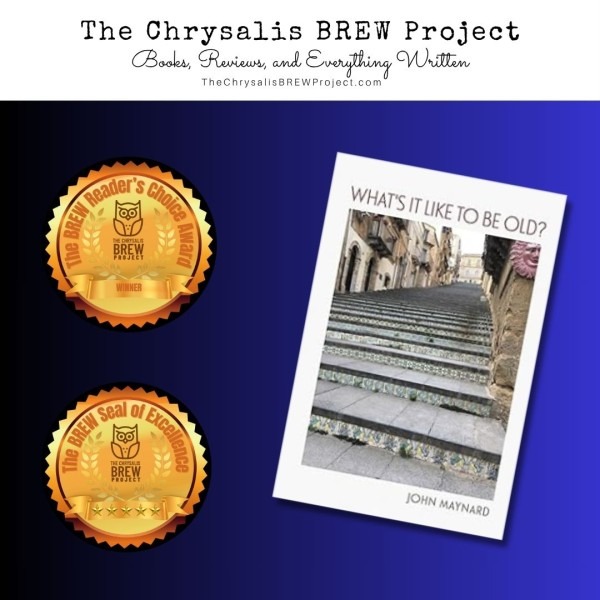
During most of his adult life, he wrote some poems and planned to write more. As he neared retirement, he found time to write many more poems. He has been editing them for book publications for the past four years. Being in Time and Change is the third of a number of books he planned. Of these, one, Armando and Maisie, has been published by Kelsay Books. The second, What’s It Like To Be Old? has recently been published by Finishing Line Press.
He has had three other books of poetry recently accepted: Political Poems, Seasons: Moments, and A Dog in Central Park.
PRAISE:
In What’s It Like To Be Old? time, aging, and mortality are the themes of John Maynard, who came to poetry relatively late in his rich literary career. Steady and direct in his focus, the subtitles portray his concerns: “Consider Old Age,” “Seniors,” “Evaporating “Immortality” and “Ripeness.” This partial list reads like a Maynard poem infused with irony and gentle wry humor. The poems range from raunchy to wistful and while they admit they can’t stop the inevitable, “they can reach out/ To those who might/ Take comfort.” The poet knows the ills, the health challenges, the gripes of old age don’t belong to him alone—this is a poetry of sharing.
—Barry Wallenstein, poet. Wallenstein’s most recent books are Odd Men Out (or In) Xanadu Press, 2025; Playing in Overtime, Ridgeway Press, 2025.
“Age has its quiet triumphs,” says John Maynard in one of his heartfelt poems. All his adult life Maynard’s eyes were turned on others: the Victorians, his students. When the time came to turn his eyes on himself he saw the years were leaving their mark. What then? Poetry was there to light his way. Not as catharsis but as a means of understanding and sharing with others the plights and insights of aging. Painful as his poems may be, every now and then Maynard’s special sense of humor shows its tail with sing-song strokes. “Think how easy it is to find a rhyme,” he confesses. Or he catches himself “Repeating rhythms to the nervous pulse of my brain.” Delving into this book you will appreciate what’s it like to be old. But a new question arises: “Who forgot to turn desire off?” Fortunately there is no answer to that, so the poems—ripe fruits of desire—flow on without flinching.
—Luisa Valenzuela, Argentinian late-‘Boom’ major novelist.
NEWS AND MORE:
Reviews
There are no reviews yet.